AI video · 7 min read
Hands, posture and continuity: the tests behind Elías
What producing a recurring human character involved: hands, poses, references and continuity. Four clips to compare control of the first frame.
In preparation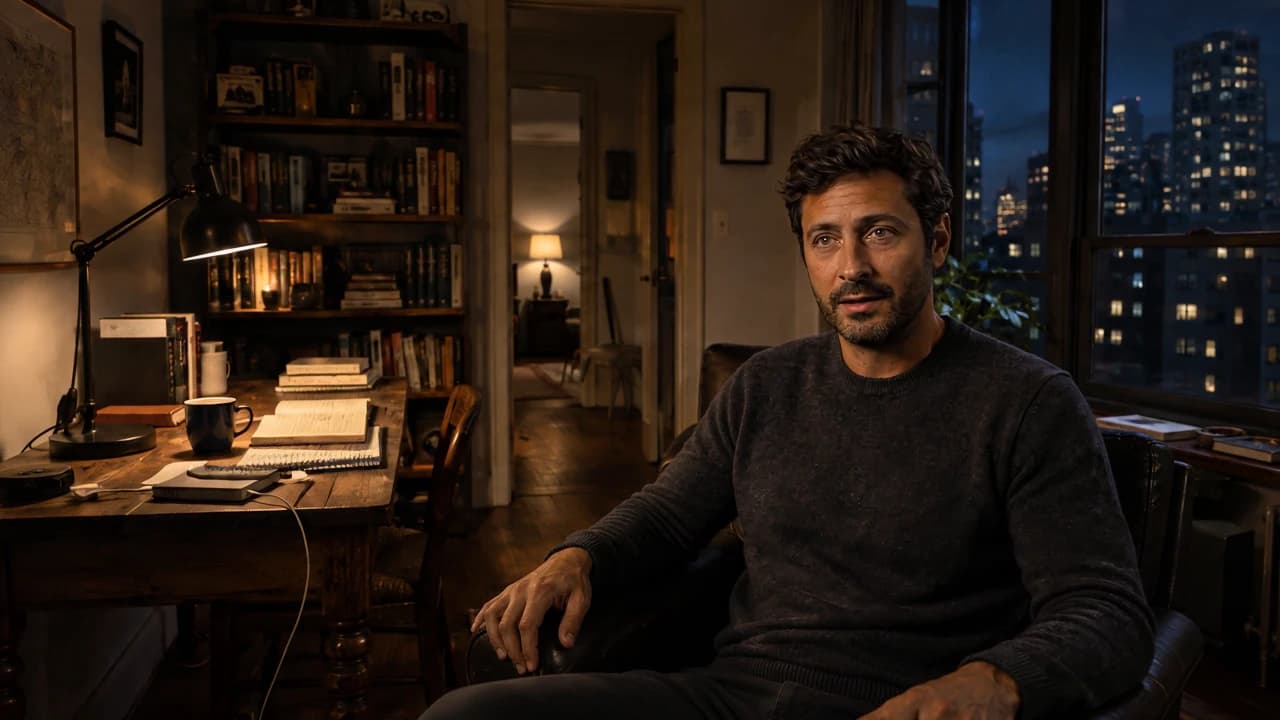
Article awaiting editorial review.
Generating the Elías videos produced problems with hands, body anatomy and positions that did not look natural. Reviewing the footage meant returning to anatomy, pose and the character's relationship with the setting.
That is the experiment I want to describe. It is relevant to people producing a video series or building an app that needs recurring human characters. The goal is to get material we can develop further, animate and edit while keeping a recognizable visual identity.
From the intended shot to material for editing
- 01Define the shotCharacter, setting and movement
- 02Prepare referencesPose, supports, framing and instructions
- 03Generate videoKeep the parameters and each attempt
- 04Review the outputAnatomy, posture and continuity
Adjust references or instructions and generate again
Select material for editing
Define the pose and examine the body
A seated conversation looks simple. Elías wears a dark sweater in a nighttime apartment, surrounded by books, with the city outside. His posture needs to feel natural within that setting.
The failures I remember appeared during video generation. Hands and body position were part of the problem. The pose we wanted and the one that appeared in the output needed review.
When I look at a scene like this, I want to understand how the body is supported, where the hands rest and how the posture relates to the seat. Those give us specific criteria for reviewing the material. These relationships contribute to a natural-looking scene.
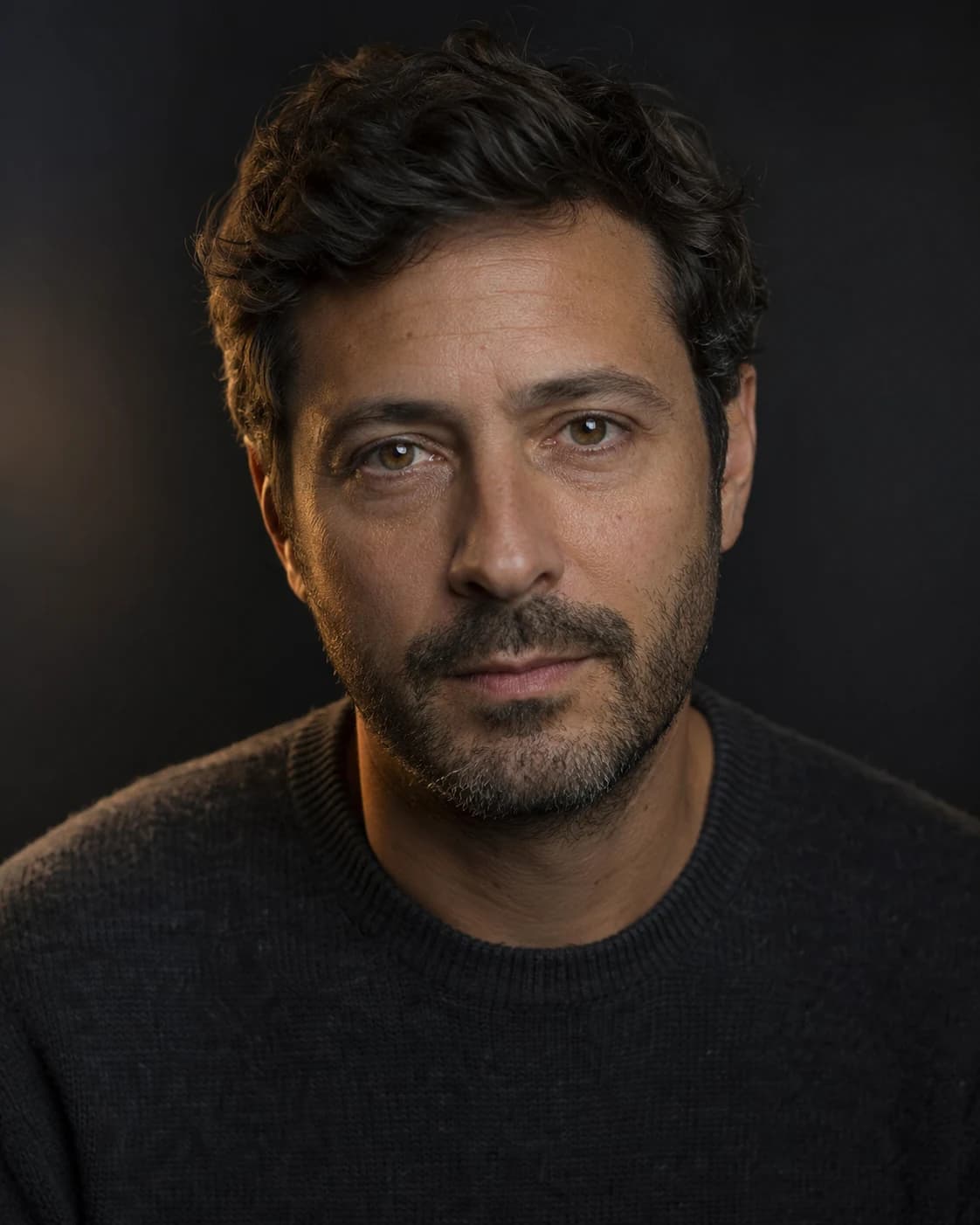
Face and pose: two character references
Face

Seated character
What I would test with the references
Looking back, I would test references that define the video's pose and framing more clearly: where the hands sit, how the body is supported and how it relates to the chair. This is a proposed improvement to test.
Runway's documentation recommends preparing character references for the angles and shots the project will need. That guidance supports the direction of the test.
Also, in the xAI mode used by the repository, images guide a new shot without automatically fixing its first frame. A better-prepared reference still leaves generation and review work during movement. The comparison we ran afterward kept the same images: it tested pinning the start without testing a more detailed reference.
Test different models
I remember working with Grok and OpenAI in these tests. Time kept us from testing Gemini and diffusion tools. The time available set the scope of the experiment.
The four clips below were generated with Grok Imagine Video 1.5. They compare two ways to control the start with the same model. Earlier tests with other tools are part of the process; this comparison does not establish which produces better anatomy.
Keep the character within the setting
The two references show Elías's face and the seated character. The video block opens the scene into a horizontal composition with a desk, bookshelves and windows.
That wider view requires us to consider posture together with the setting. The character's identity, pose and relationship with the space all contribute to a coherent scene. Producing another shot means deciding what to preserve and what can vary.
The experiment's code separates identity references from apartment references. It also selects images for each type of shot. This organizes those decisions so we can return to them during testing.
The original block
Carry a reference into the next attempt
The video workflow defines a step for extracting a frame from the first block and adding it as a composition reference for other seated shots. The intention is to guide camera distance, subject scale and the relationship with the chair.
It also defines apartment shots without the character and a specific reference selection for the desk. Each type of shot creates a different relationship between the starting images and the output we want.
These controls give us elements to adjust and compare. Their usefulness is examined through the outputs: what carries through, what changes and what needs another round.
Four clips to test the start
I returned to the repository to compare two ways of using the same frame, extracted ten seconds into the first block. In A, we sent it as another composition reference. In B, we also pinned it as the first frame.
We generated two eight-second clips per option with Grok Imagine Video 1.5. We kept the same six references, text, Rex voice and instructions for a static camera and a seated character with very little movement.
B1 and B2 start closer to the source frame. A1 also comes close; A2 introduces a small framing variation. In the visual samples from all four clips, the hands stay supported, the body keeps its seated pose, and the desk, bookshelves, lamps and windows retain their arrangement.
We found no clear anatomical improvement from pinning the start. No obvious anatomical failures reappeared in the samples from this test either. The hand at the lower edge is partly outside the frame, and the performance requires very little hand or body movement.
The result helps me prepare the start of this shot. Gestures, changes of pose and more detailed references remain separate tests to run.
A and B: two attempts per condition
Four clips requested at eight seconds each, with Grok Imagine Video 1.5, Rex voice and the same six references. B also pins the composition frame at the start.
Frame-based visual review at four samples per second, enlarged crops and exact frames at 00:00, 00:02, 00:04 and 00:08. Voice and lip sync were not assessed.
Review with the finished piece in mind
The supplied original block lasts about fifteen seconds. We reviewed it alongside four new clips of the same seated scene. Comparing the project's other shot types remains pending.
Editing brings another review. We need to examine posture, gestures, subject scale and continuity of the setting when moving from one shot to the next. There are also decisions about voice, pacing and cuts.
The difficulty of this experiment brings those parts together: anatomy, pose, how references are interpreted, differences between models and preparing the material for use. That is the work I want to make visible.
Work on your character and scene
If you are producing videos or building an app with human characters, I can help define references and poses, set up tests and review the material with its edit and final use in mind. We can start with the images or clips you already have and work on the problem holding production back.
Let's talk about your character.