Video and content · 5 min read
Lila: building a recognizable character for recurring content
A strong image can start a story. To keep telling it, you need to decide what carries over. Building Lila, from visual references to video.

A business commissions a video to introduce its offer. The piece works, but the next one has a different face and a different style. It feels like another project. Every delivery starts over. Producing more images does not, by itself, create continuity.
With Lila, I am building a visual direction I can keep using: a recognizable character, references to guide the next pieces and scenes with something to say. The work starts with video and content; later, it could help explain an automation or present research.
See Lila in motionFirst, someone to recognize
Before choosing settings, I defined Lila’s main traits. Long, tousled hair with an eighties reference; denim shorts, loose shirts and a confident attitude. She goes barefoot. A red Yamaha Passol belongs in her world; aviator sunglasses appear when she rides.
The character sheet separates what defines her from what can change. A different shirt or a new location should expand her world without making us invent her again. Her face matters, but so do posture, clothing and the way she occupies a scene.

Give the scene a reason to exist
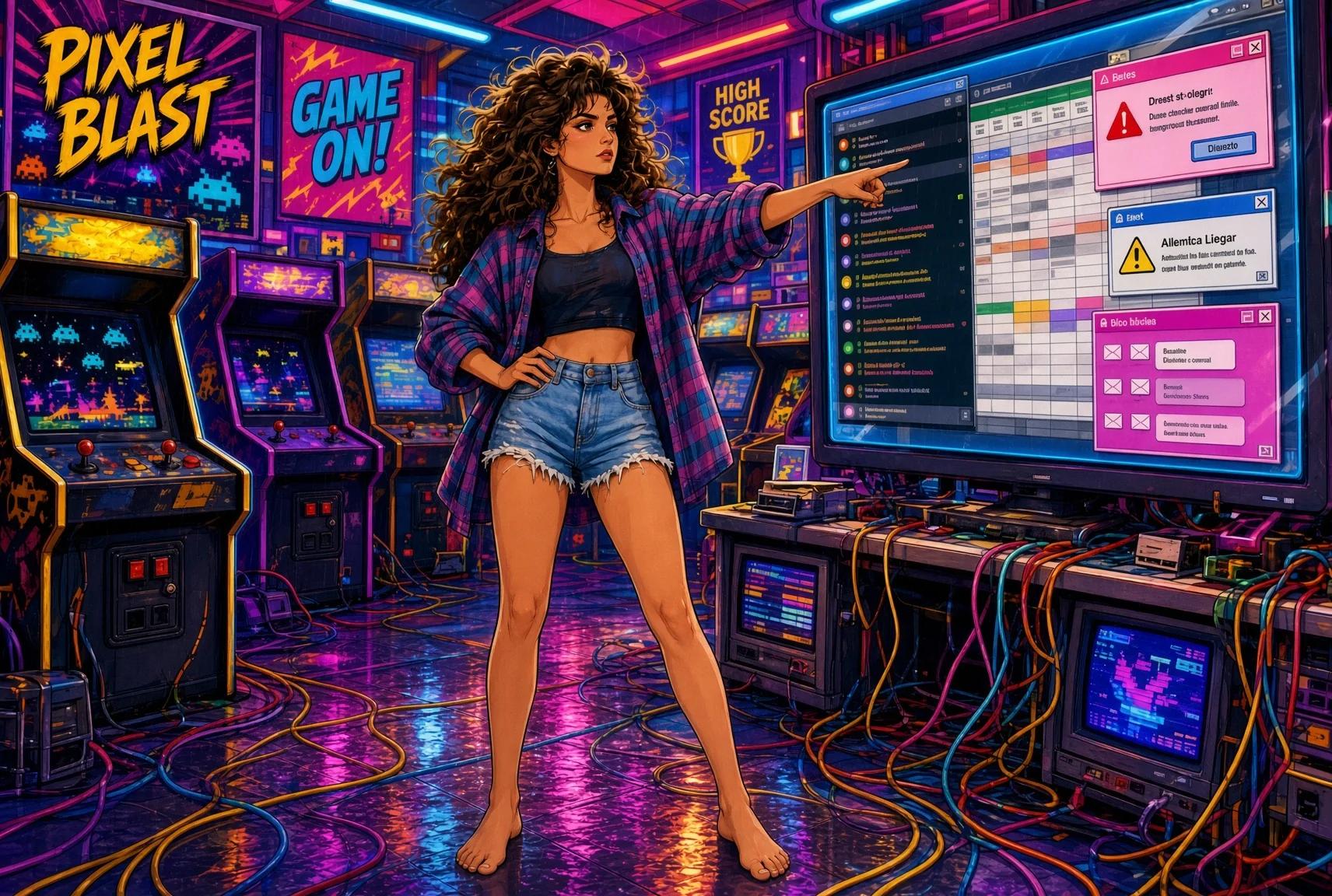
The arcade brings that personality into a work setting. Among cables, equipment and screens with messages and spreadsheets, Lila points to something that needs attention. It is a visual exploration for talking about automation: the scene suggests a problem that a later piece can explain.
Cyan, magenta and yellow give that setting its energy. On the road, sunset light changes the mood. The aim is to vary the setting and pace while keeping enough references to recognize her.
There is also a style decision to resolve. The arcade is illustrated; the portrait and motorcycle images use a photographic look. These tests help choose a series’ visual language. For a specific delivery, we need to agree on it and hold it across shots.
A new framing tests the reference
The cover portrait focuses attention on her face. The side view of the motorcycle shows her clothes, posture and relationship with the vehicle. In this wider view, Lila takes up less space and the setting begins to tell part of the story.
Comparing the images also reveals what still needs work. The motorcycle changes shape between views: keeping it red is not enough to preserve the same vehicle. That review is part of producing shots that can be edited together, just like checking the face or proportions.

Movement is the next test
The 44-second edit starts outside an arcade, follows the ride along an open road and ends with a side view of the motorcycle before the brand closing. The reference images begin to become a short story.
When reviewing motion, I look at what carries over between shots, where the appearance changes and which transitions need another reference or a new generation. An image can work on its own and still fail to fit the next shot. That selection produces the material for editing.
Lila in motion
Give the character a job
The next step is to use that direction to explain something specific: an offer, the path of an inquiry or a comparison that helps someone decide. The scene should give the viewer a reason to keep watching and a clear action at the end.
For a business, I would start with one piece: what you sell, who it is for and where it will be published. From there, we define the message, references, script and delivery formats. The decisions that work become the starting point for the next piece.
That is the value I want to take from Lila into content production: telling the next part of a story while keeping what made the previous one recognizable.
What does your next video need to explain?
We can start with one specific piece. Tell me what you sell, who you want to reach and where you plan to publish it. I can help define the visual direction and produce the images and video for that first delivery.
Let’s talk about your next video.